


What If Consciousness Isn't Produced By the Brain? (And Why This Isn't Anti-Science)

Here's a question that makes most neuroscientists uncomfortable: What if the brain doesn't produce consciousness?
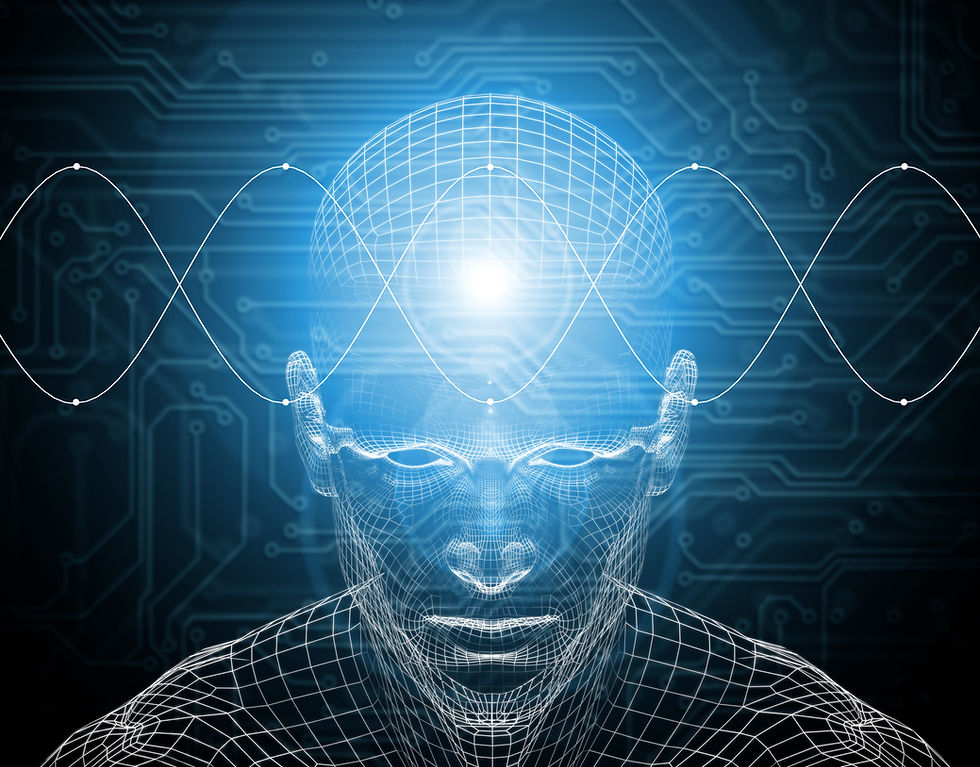
What if the brain is more like a receiver or transmitter? More like a radio tuning into a signal rather than generating the music?
This idea, called the transmission theory or filter theory of consciousness, is often dismissed as unscientific mysticism. But it has a respectable philosophical pedigree, is consistent with everything we observe scientifically, and might actually solve problems that the production theory struggles with.
Let me be clear about my credentials before making this case: I'm a researcher at Cambridge studying plasma physics. I value empirical evidence and rigorous thinking. I'm not proposing we abandon neuroscience or embrace magical thinking.
What I'm suggesting is that the dominant assumption, that brains produce consciousness the way livers produce bile, is an assumption, not an established fact. And there's an alternative that deserves serious consideration.

The Standard View: Production Theory
The mainstream scientific view goes something like this:
Consciousness is produced by the brain. Neural activity generates subjective experience. When neurons fire in certain patterns, consciousness emerges. No brain activity, no consciousness.
Evidence:
Brain damage affects consciousness.
Brain states correlate with conscious states.
Anaesthesia that affects brain function eliminates consciousness.
Brain death means death of consciousness.
This seems obvious. It's what most scientists assume. It's taught in neuroscience courses. It's the working hypothesis of consciousness research.
But here's the thing: all this evidence is equally consistent with a different theory.
The Alternative: Transmission Theory
The transmission theory suggests:
Consciousness is fundamental, not produced. Brains don't generate consciousness. Instead, they receive, filter, focus, or transmit it. The brain is an interface between consciousness and physical reality, not a generator of consciousness.
The radio analogy: When you damage a radio, the music stops or becomes distorted. But that doesn't mean the radio was producing the music. It was receiving and transmitting a signal that exists independently.
Similarly, when you damage a brain, consciousness changes or ceases (in that particular physical manifestation). But that doesn't prove the brain was producing consciousness.
Who's proposed this?
This isn't New Age nonsense. It's been seriously considered by:
William James (founder of American psychology): Explicitly defended the transmission theory
Henri Bergson (Nobel Prize-winning philosopher): Argued the brain filters consciousness rather than produces it
Aldous Huxley: Developed Bergson's ideas in "The Doors of Perception"
F.C.S. Schiller: Defended transmission theory philosophically
Current philosophers: David Chalmers has noted that transmission theory is logically possible and empirically equivalent to production theory.
Why Scientists Resist This Idea
Before going further, let me acknowledge why most scientists dismiss transmission theory:
It seems to violate parsimony. Production theory is simpler. Why add consciousness as a fundamental feature when you can just say brains produce it?
Response: But production theory has its own complexity problem of explaining how and why physical processes generate subjective experience. That's the hard problem of consciousness. Transmission theory might be simpler overall if it avoids this problem.
It seems untestable. How would you distinguish production from transmission empirically?
Response: That's a challenge, but not necessarily fatal. We believe in things we can't directly test if they have explanatory power and fit the evidence. And there might be ways to test this (more on that later).
It seems to imply dualism. Consciousness existing independently of brains sounds like Cartesian dualism.
Response: Not necessarily. Consciousness could be fundamental to physics itself (like space, time, or mass) without being a separate substance. This is closer to panpsychism or neutral monism than dualism.
It seems spiritually motivated. Scientists suspect this is about wanting consciousness to survive death, not about evidence.
Response: Some proponents are indeed motivated by this. But that doesn't make the theory wrong. Newton's alchemy interests didn't make his physics wrong. And some of us are genuinely interested in finding the right explanation regardless of implications.
The Evidence That Doesn't Distinguish
Here's what's crucial: all the standard evidence for production theory is equally explained by transmission theory.
Brain Damage Affects Consciousness
Production theory: Damage the generator, consciousness changes.
Transmission theory: Damage the receiver, the signal comes through differently or not at all.
Example: When I damage my radio, I might get static instead of music. I might lose certain frequencies. The music might become unrecognisable. But I haven't damaged the radio station.
Neural Correlates of Consciousness
Production theory: These brain states produce these experiences.
Transmission theory: These brain states tune into or transmit these aspects of consciousness.
Example: Specific frequencies on a radio dial correlate with specific stations. But the dial isn't producing the stations. It's selecting which signal to receive.
Anaesthesia Eliminates Consciousness
Production theory: Shut down the brain's consciousness-producing mechanisms, consciousness stops.
Transmission theory: Shut down the brain's receiving/transmitting capacity, consciousness stops flowing through this particular physical system.
Example: Unplug a radio, the music stops. But the radio waves are still there.
Brain Complexity Correlates With Consciousness
Production theory: More complex brains produce more complex consciousness.
Transmission theory: More complex brains can receive/transmit more complex aspects of consciousness.
Example: A sophisticated radio can receive more channels, better fidelity, multiple signals simultaneously. A simple crystal radio can only receive basic AM signals.
The point: Both theories predict the same observations. The neuroscience we have doesn't distinguish between them.
What Transmission Theory Explains Better
But transmission theory might actually explain some things production theory struggles with:
The Hard Problem of Consciousness
Production theory's problem: How does physical process produce subjective experience? Why is there "something it's like" to have certain brain states?
This is considered one of the hardest problems in philosophy. No one has a satisfying answer.
Transmission theory's advantage: If consciousness is fundamental, there's no hard problem. We don't need to explain how matter produces consciousness because it doesn't. We only need to explain how brains tune into or constrain consciousness into particular forms.
That's still hard, but it's a different kind of problem, more like explaining how radios work than explaining how radios create music from nothing.
The Unity of Consciousness
Production theory's problem: How do separate neural processes combine into unified conscious experience? This is called the binding problem.
Transmission theory's advantage: Consciousness might be unified at the fundamental level. The brain processes just need to tap into that unity, not create it.
The Continuity of Self
Production theory's problem: Your brain cells are constantly being replaced. Neural patterns change continuously. Yet you experience yourself as the same person. What accounts for this continuity?
Transmission theory's advantage: If consciousness isn't identical to brain states, the continuity of self doesn't require the continuity of specific neurons. The same consciousness can interface with different physical substrates.
Near-Death Experiences
Production theory's problem: People report vivid, coherent experiences during periods when their brains show minimal or no activity. How?
Transmission theory's advantage: If brains transmit rather than produce consciousness, consciousness could continue during periods of brain shutdown, with memories encoded when brain function returns.
(Note: I'm not claiming Near Death Experiences prove transmission theory. But they're anomalous for production theory and expected by transmission theory.)
Developmental Considerations
Production theory's problem: At what point in development does the brain start producing consciousness? Is a fetus conscious? An embryo? When does consciousness begin?
Transmission theory's advantage: Consciousness is always present. Developing brains gradually gain capacity to interface with it in more complex ways.
My Shamanic Experience
I need to be honest about why I take transmission theory seriously. It's not just philosophy.
In shamanic practice, I regularly experience consciousness as not confined to my skull. I encounter what seem like autonomous consciousnesses (spirits, entities, ancestors) that don't appear to be brain-generated. I access information I couldn't have through normal sensory channels. I experience myself as participating in consciousness rather than producing it.
These experiences feel more like tuning a radio than generating signals. I'm accessing something that's already there, not creating it from scratch.
This doesn't prove transmission theory. Experiences can be misleading. But it provides phenomenological data consistent with the theory.
The Neuroscience Is Consistent With Both
Let me emphasise: nothing in neuroscience proves production theory. It's all consistent with both theories.
What we observe:
Consciousness correlates with brain activity.
Specific experiences correlate with specific neural patterns.
Brain damage affects consciousness.
Brain death ends observable consciousness (in that body).
What we don't observe:
How brain activity produces subjective experience
Why certain patterns generate experience and others don't
Where in the causal chain experience enters
What the sufficient conditions for consciousness are
The production theory and transmission theory both predict what we observe. Neither is proven by the observations.
How Could We Test This?
Transmission theory seems unfalsifiable at first. But there might be ways to distinguish the theories:
Terminal Lucidity
Sometimes patients with severe dementia or brain damage suddenly become lucid shortly before death. Production theory struggles to explain this because why would a severely damaged brain suddenly function well?
Transmission theory predicts this might happen as the dying process temporarily increases the brain's receptive capacity.
Test: Study terminal lucidity systematically. If it's common and dramatic, that favours transmission theory.
Near-Death Experiences During Cardiac Arrest
If people report accurate perceptions during periods of documented brain shutdown, that's strong evidence for transmission theory.
Test: Place unique images visible only from ceiling level in cardiac care units. If Near Death Experiencers accurately report these during periods of flat EEG, that challenges production theory severely.
Consciousness in Simple Systems
If consciousness requires complex brains to produce it, we shouldn't find evidence of experience in simple organisms. If consciousness is fundamental and even simple systems can tap into it, we might.
Test: Look for evidence of learning, choice, or experience-like behaviour in systems too simple for complex information processing. (Some experiments with slime moulds and plants hint at this.)
Anomalous Information Transfer
If consciousness is non-local (as transmission theory might suggest), we might find evidence of information transfer that doesn't go through normal sensory channels.
Test: Rigorous studies of telepathy, remote viewing, or precognition. If these phenomena are real even in small effect sizes, they support transmission over production theory.
Meditation and Altered States
If brains produce consciousness, altering brain activity should only degrade or distort experience. If brains filter/transmit consciousness, reducing certain brain activity might expand experience.
Test: Study experienced meditators who report expanded consciousness during states of reduced brain activity. If the reports are consistent and correlation is strong, that favours transmission theory.
None of these tests are definitive. But they could provide evidence favouring one theory over the other.
Why This Isn't Anti-Science
I want to be very clear: Considering transmission theory isn't anti-scientific. Here's why:
Science is about following evidence wherever it leads, not defending comfortable assumptions. If transmission theory better fits the data, science should consider it.
Science has been wrong before about what's fundamental. We once thought space and time were absolute. We thought matter was continuous. We thought determinism was absolute. Each time, physics revealed something more fundamental. Why assume we've got consciousness right?
Transmission theory makes testable predictions. It's not unfalsifiable mysticism. It just hasn't been tested rigorously because of prior commitment to production theory.
Many great scientists have questioned production theory. William James, one of the founders of modern psychology, explicitly defended transmission theory. Was he anti-scientific?
The hard problem suggests we're missing something. If production theory can't explain how subjective experience arises from objective processes, maybe that's because it's the wrong framework.
Neuroscience continues regardless. Even if transmission theory is right, we still need to understand how brains interface with consciousness. All the same research remains relevant.
What Changes If Transmission Theory Is True?
If consciousness isn't produced by brains, several things follow:
Death Isn't What We Think
Brain death wouldn't be the end of consciousness, but just the end of one particular interface with physical reality.
This doesn't necessarily mean personal survival. The consciousness that continues might not retain individual identity, memory, or personality. But something continues.
Consciousness Research Needs Expansion
We'd need to study not just brains, but the fundamental nature of consciousness itself. This might require integrating neuroscience with contemplative investigation, phenomenology, and possibly even physics.
Ethics Become More Complex
If consciousness is more pervasive than we think, our moral circle might need to expand. This doesn't mean trees have rights identical to humans, but it complicates our relationship to the natural world.
Healing Has More Dimensions
If consciousness can exist independently of particular brains, healing might work through consciousness-to-consciousness interaction, not just physical intervention.
This doesn't validate every healing claim. But it opens possibilities that materialism forecloses.
Mental Health Treatment Could Expand
If consciousness isn't identical to brain states, interventions might work at the level of consciousness itself, not just neurochemistry.
Meditation, contemplative practice, and altered states might be therapeutic not just by changing brain function but by accessing consciousness more directly.
My Position (Held Tentatively)
Based on years of shamanic practice combined with philosophical study and scientific training:
I think transmission theory is more likely true than production theory. Not with certainty, but as my working hypothesis.
The phenomenology of altered states consistently supports it. When you experience consciousness as non-local, primary, and independent of the body, production theory feels wrong phenomenologically.
It solves philosophical problems production theory can't. The hard problem, the binding problem, the continuity of self, all become more tractable.
It fits my actual experiences. Of precognition, of spirit encounters, of accessing information non-locally. These make sense if consciousness is fundamental, not brain-produced.
But I hold this tentatively. I could be wrong. The experiences could be misleading. There might be aspects of production theory I haven't understood. I stay open.
The Invitation
I'm not asking you to believe transmission theory. I'm asking you to consider it as a serious alternative worth investigating.
To scientists: Don't dismiss this as mysticism. Test it. Design studies that could distinguish production from transmission. Follow the evidence.
To philosophers: Don't assume production theory is obviously right. The hard problem should make us question basic assumptions. Maybe consciousness being fundamental is the better starting point.
To spiritual practitioners: Don't use this as license for sloppy thinking. If transmission theory is true, we still need rigour about what that means and how consciousness interfaces with physical reality.
To skeptics: Don't assume questioning production theory means rejecting science. It might mean taking science seriously enough to question comfortable assumptions.
Living the Question
I don't know for certain whether brains produce or transmit consciousness. But I've experienced consciousness as fundamental, non-local, and primary often enough to take transmission theory seriously.
This changes how I relate to:
My own consciousness (not just my brain, but something interfacing with physical reality)
Other beings (potentially conscious in ways I don't fully understand)
Death (possibly a transition rather than an ending)
Meaning (potentially grounded in something more fundamental than brain states)
But I stay curious. I investigate. I remain open to being wrong.
The question matters. How we think about consciousness shapes how we do science, how we approach death, how we understand ourselves, and how we relate to the universe.
Maybe the brain produces consciousness. Maybe it transmits it. Maybe the truth is more complex than either model suggests.
But we won't find out by assuming we already know.
I'm Kathy Postelle Rixon, researcher at Cambridge studying plasma physics, Chair of The Philosophical Society: Oxford, and shamanic practitioner whose experiences suggest consciousness might be more fundamental than mainstream science assumes. I don't claim certainty, but I think this question deserves serious investigation. If this resonates, reach out at kathy@magicinharmony.com or visit www.magicinharmony.com.
What's your intuition about consciousness? Does it feel like something your brain produces, or something you're tapping into? I'd genuinely love to hear your perspective.


Comments